
▶ Watch the film — Omnibalance Opens on YouTube in a new window.
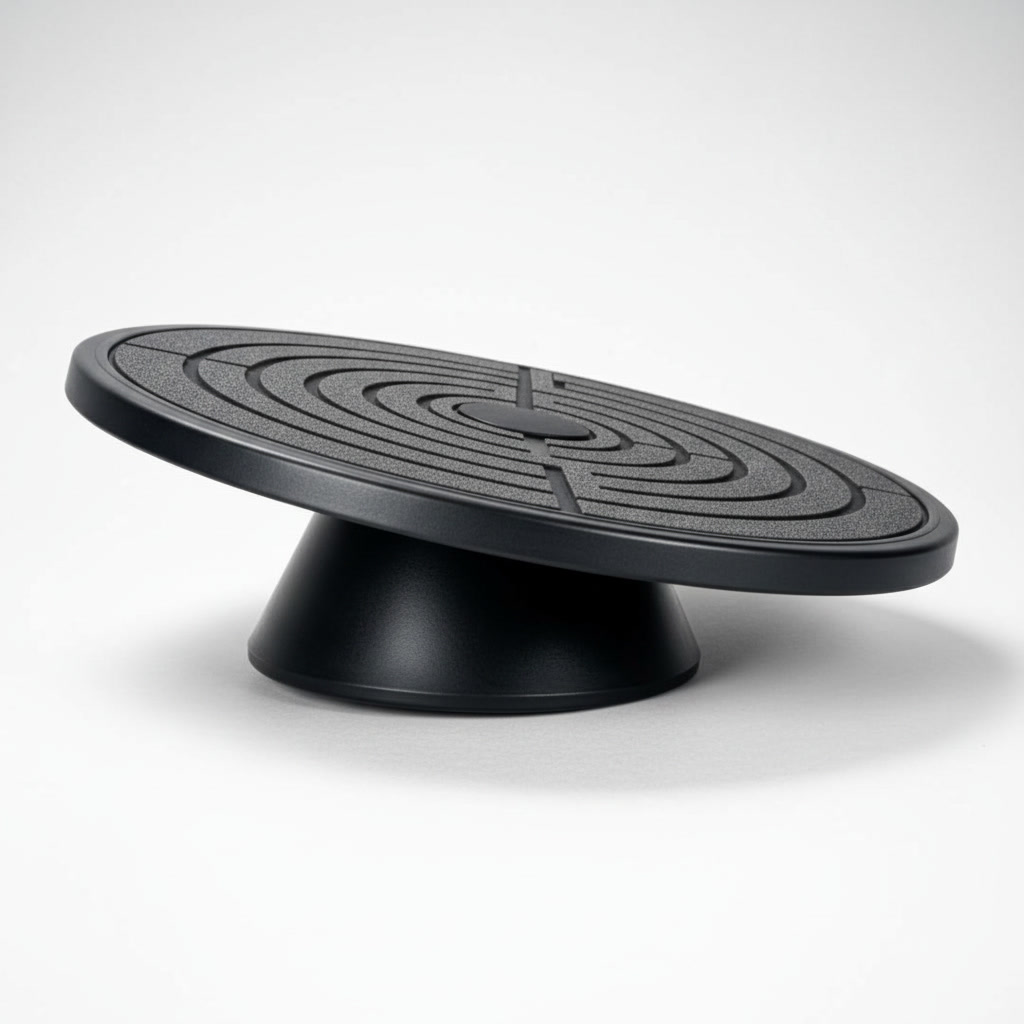
So much of trauma keeps us swinging between extremes. Omnibalance is the slow art of holding our contradictions — of staying on the bike without falling off either side.
This Dynamic began its life under a different name. I first called it Ambibalance — a marriage of ambivalence and balance — because I wanted a word for that very human experience of inner conflict and indecision, the pull of opposite feelings at the same time. Over time it grew into Omnibalance: balance in all things. It is an ideal we will never fully reach in this life, and yet it is one of the most useful things we can aim towards, because so much of the damage of trauma shows up as a loss of balance — a swinging between extremes that exhausts us.
From either/or to both-and
When we are children, we tend to think in absolutes: good or bad, happy or sad, angry or calm. That two-sided, dualistic view is a narrow way of seeing human beings, but it is developmentally normal for the young. As we mature in a healthy way, we learn to hold many feelings at once — even contradictory ones — and to live from a position of both-and rather than either/or. We become able to love someone and be furious with them; to grieve a loss and be grateful it happened; to feel afraid and do the brave thing anyway.
Trauma interrupts that maturing. People who grew up with developmental and relational trauma often remain caught in the absolutes, because absolutes once kept them safe. If a caregiver was unpredictable, then deciding quickly that someone is all good or all bad was a survival strategy, not a character flaw. The trouble is that strategies which fitted us as children no longer fit us as adults — rather like the clothes we wore at seven. We have to outgrow them, and find more spacious ways of seeing.
Acceptance is at the very centre of overcoming trauma. Omnibalance is the capacity to hold contradictory thoughts and feelings without obliterating one of them, or secretly taking sides against half of ourselves.
What helps us develop this wider perspective? That same neglected art of contemplation I keep returning to — the practice of observing our feelings and responses without immediately judging them as positive or negative. When we can watch our own inner weather with a little curiosity, we begin to accept the full, polar, contradictory range of our humanity as simply part of us, rather than splitting ourselves into the acceptable half and the shameful half. Carl Jung wrote of the persona and the shadow; Omnibalance is, in part, the long work of refusing to disown the shadow.
Polarities, choices and the double bind
Balance is also deeply tied to choice and agency, and this is where many survivors struggle. Some of us grew up watched and controlled, told what to do, taught to put away the part of us that asked questions or wanted to say no. Others grew up with the opposite problem — parents who could not make decisions and left them to us, so that choosing became frightening, because we had no secure ground to choose from. And many of us were caught in a double bind: trapped between the conflicting demands and manipulations of caregivers, damned if we did and damned if we didn’t, so that whatever we chose, someone would be displeased. The legacy of that is a habit of sitting on the fence, procrastinating, terrified that any choice will be the wrong one.
Yet for an adult, choice is simply part of life, and a sense of our own agency is vital to taking responsibility for our actions, words and responses. I often hear the phrase, “they made me feel…” as though a feeling could be branded onto us like a mark on cattle. With great gentleness, I question it. No one can make us feel anything without our participation. It is more accurate — and far more freeing — to say, “when you said that, I felt…” or “when that happens, my automatic response is…” Notice the ownership in those sentences. That ownership is not self-blame; it is the doorway to agency.
Good pain, and the window of tolerance
The hard part is that we do not want to own the ‘negative’ feelings, or tolerate the painful ones. But avoidance has a cost. Let me offer the picture I use with clients. When we sleep on our arm, it goes numb; the blood stops flowing and the feeling fades. Leave it long enough and the arm stops working altogether. When we roll off it, the blood floods back — and it hurts, all pins and needles. Or think of a bad burn: at first there is little pain, because the nerves have been seared and deadened. The relief is real, but the skin is not healthy — it is dead. And when it begins to heal, when the nerves and tissues regrow and come back to life, it hurts like mad.
That is what I call good pain. It is the ache of something coming back to life, of working through rather than escaping. Reclaiming our feeling and our functioning can be frightening, but it is crucial not to confuse discomfort with danger. As we let ourselves feel these long-avoided emotions in the present, we gradually widen what Dan Siegel and others call the window of tolerance — the band within which we can stay present and regulated rather than tipping into overwhelm or shutdown. For survivors, that window has often become very narrow, pulled tight by years of self-protection. We widen it by working at the edges, staying with discomfort without trespassing into genuine unsafety — learning, over and over, that we can feel uncomfortable and still be safe.
The aim is not to feel less, but to be able to hold more — a wider range of feeling, without being toppled by any of it.
Omnibalance, then, is more than emotional poise. It is a way of caring for all our needs at once — physical, emotional, relational, spiritual — in a way that allows not just survival but flourishing. As I write this very paragraph I am practising it: I am tired and my body is stiffening from hours at the desk, and part of me wants to push on and finish. But if I sit here too long the pain will make tomorrow’s work impossible. So I will find a good stopping place, feel satisfied with what I have done, and go and move my body. I am holding my need to achieve and my need to rest in the same hand. That, in miniature, is the whole Dynamic.
Why this matters for practitioners
For those of us who accompany others, Omnibalance is a double discipline. We are helping clients widen their windows of tolerance — working at the edges with them, never pressing them past what they can bear, never colluding with avoidance either. And we are doing the same for ourselves, because trauma work will test our own balance constantly. The therapist who can hold both-and in the room — who can let a client be furious and grieving, who can stay regulated while the client is not — offers something the client may never have experienced: a steady other who does not need them to be simple. Learning that steadiness, in our bodies and not just our heads, is some of the most important work we do together on the Level 7 course.
There is one more reason I labour this Dynamic. Many of the conditions that bring people to therapy — addictions, obsessive-compulsive patterns, disordered eating, self-harm — are, at heart, failed attempts at balance. The drive behind them is often a desperate effort to regulate an unbearable inner state, using strategies that once seemed to help and now do harm. “Better the devil you know,” we say — and in saying it, we consign ourselves to living with a devil. The work of Omnibalance is not to shame these strategies away but to understand them, and then to build, patiently, the new neural pathways that make a healthier balance possible. That is slow work; it is rather like constructing a bypass to divert traffic from a road that can no longer bear it, and it takes about as long. But it can be done, and watching a person discover that they can hold their own contradictions — that they no longer have to split themselves in two — is one of the quiet joys of this work.
Notice, finally, that Omnibalance is not the same as calm. A balanced life is not a flat or placid one; mine is full of joy and sorrow, laughter and pain, often within the same hour. The aim is not to feel less, but to be able to hold more — a wider range of feeling, without being toppled by any of it. That capacity is built gradually, at the edges of the window of tolerance, one tolerable discomfort at a time.
A few questions to sit with
- Where do you still think in absolutes — about others, or about yourself?
- How wide is your window of tolerance, and what tends to narrow it?
- Can you recall a recent moment of good pain — the ache of something healthy coming back to life?
About the course
The Anastasis Model sits at the heart of a Level 7 Diploma in trauma-informed, advanced therapeutic practice — written for counsellors and psychotherapists who want to work more deeply with developmental and relational trauma, and who are moving towards senior accreditation (SCoPEd Column C).
It runs online, with three in-person residentials, over fifteen months: October 2026 to December 2027. The group is deliberately small — capped at twelve — so no one is ever just a face in a crowded screen. The fee is £5,250, with payment plans available.
To enquire, email training@authentictandt.uk or call Annie on 07949 677405. We shape the cohort together through conversation, so do get in touch early.