▶ Watch the film — Alchemy Opens on YouTube in a new window.
The last Domain is the most hopeful, and the hardest to put into words. Alchemy is where loss is grieved, where what happened is accepted, and where a person dares to ask: who might I yet become?
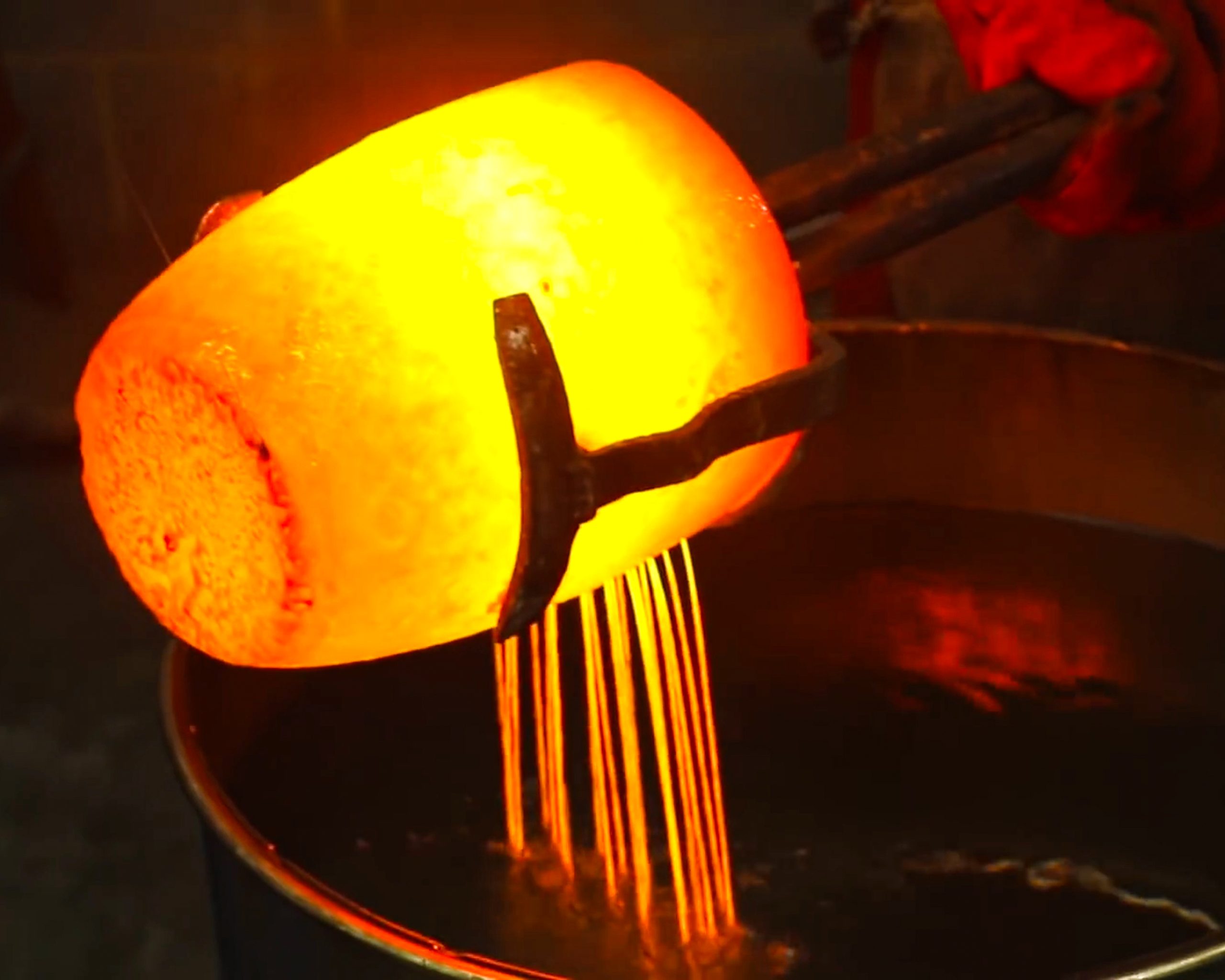
As I sit down to write about this final Domain, I notice the irony that I am struggling to articulate it — because Alchemy is precisely the outcome of struggle and reformation. In legend, alchemy is the turning of base metals into gold. And gold has to be refined, which is neither comfortable nor painless. The metal is melted into liquid — so the shapes we have made of our lives may have to change. As the heat rises, the dross and impurities float to the surface and are skimmed away — so we may need to let go of activities, beliefs, behaviours and even people that tarnish and damage us. Alchemy, then, is the Domain of leaving behind and accepting the loss of anything that would prevent us from becoming all we were created to be.
Grief that we have refused to grieve
Therapists of every school have long understood that unprocessed loss takes its toll on body, mind, soul and spirit. The grief models of Kübler-Ross, of Worden, of Stroebe and Schut, of Tonkin, all attest to it. And more recently the work on post-traumatic growth — from Tedeschi and Calhoun, and from the positive psychologists — has offered a striking hope: that we may not only survive trauma, but find that the experience itself can become a springboard into growth and gifting we would never otherwise have known.
As we journey the Labyrinth of recovery, we come to recognise the losses we have borne and the things that were taken from us. Approaching Alchemy from Amnesty, we arrive having learned to separate from what is unhealthy and to repair the boundaries that caused us so much pain. Our hands are now open to receive what this Domain offers. The first function here is Requiem — a word meaning rest, used in funeral rites and in the music of loss — and it forms a key part of Accepting our experiences as part of our life’s journey, rather than living in regret and ‘what ifs’. Requiem means accepting the reality of our losses and grieving them honestly, rather than avoiding the pain.
It matters that we let Requiem be genuine grief and not a hurried funeral. Survivors are often expert at minimising their own losses — “others had it worse,” “it was a long time ago,” “I should be over it by now” — and so the grief goes unwept and, unwept, it festers. The losses of developmental and relational trauma are real and many: the childhood that should have been safe and was not; the protection that never came; the years spent managing symptoms rather than living; sometimes the relationships, the confidence, the health, the very sense of self that the trauma cost. To name those losses plainly, and to mourn them as the genuine bereavements they are, is not self-pity. It is the honest accounting without which no real acceptance is possible.
Resolve is not resignation. It is resting with what is true and real, and choosing to move forward from where we actually are — not from where we wish we were.
The function of Resolve goes a step further. It is the dawning conviction not only that those events happened and brought us loss, but that we would not be the very person we are had they not. Resolve is the quiet, hard-won acceptance that the way things have unfolded is, in some deep sense, just as it had to be — that we have come through, and it did not finally overwhelm or destroy us. It carries a flavour of the New Year resolution, that common impulse to ‘do better’, but it is steadier than that: it is a determination to move forward from reality rather than fantasy, without remaining a victim of what occurred.
Actualising: becoming who we are
This acceptance is what releases us into Actualising — the sub-domain of becoming what it is in us to be: flourishing, growing whole, taking our own unique place in the story of humanity. The functions here lead us deliberately out of our usual boxes and into the unknown.
Providence names those experiences we tend to call ‘coincidence’ or even ‘destiny’ — an acknowledgement that there are circumstances and provisions that arrive over which we had no control. I have so often heard people, having come through something they could not possibly have managed alone, say, “Wow — someone must be looking after me.” I have never yet heard anyone in a tight corner call out for an evolutionary transformation; but I have heard a great many say they need a miracle. There seems to be something innate in us, aware of a power larger and more capable than ourselves. I am not — I repeat, not — telling you what to believe. I am inviting a posture of open-minded curiosity that leaves room for the unexpected and the unexplained. After all, if we could fully explain the Divine, it would be as limited as we are.
Approached instead from Archaeology, we enter Alchemy through the function of Possibility — emerging from Discover into the sub-domain of Revealing, and on into Actualising. Joseph Luft and Harry Ingham’s Johari Window invites us to consider what is known and unknown, both to ourselves and to others. I would add a further question: what is known to the Source? Perhaps there is capacity, capability and calling in us that we do not yet know — perhaps, somewhere ahead on our Labyrinth, there is a vocation we have been preparing for, and yearning for, all along. The invitation of Possibility is to be curious, open and anticipatory; to use the prefrontal cortex rather than the limbic alarm system; to engage the very parts of ourselves that trauma shut down. Can we tap into what once seemed impossible? Dare we dream? Dare we become our possible self?
The hope at the end — and the open centre
I want to be careful here, because the language of ‘growth’ can be misused to rush people past their pain or to imply that suffering was somehow ‘worth it’. That is not what Alchemy claims. It does not pretend the harm was good, or that the gold justifies the fire. It claims only this: that having grieved our losses honestly (Requiem), and accepted our story as the ground we actually stand on (Resolve), we may find ourselves not merely intact but, in places, refined — carrying a compassion, a depth, a calling that we would not otherwise possess. That is a hope offered, never a duty imposed. Some days it will feel real; other days it will feel a long way off. Both are OK.
That, in the end, is Anastasis: not a tidy ending, but a living again.
And so the model ends not with a full stop but with an open space. Beyond Alchemy lie the rings of Consolidation and Consolation, and at the very centre the void — the undrawn space kept for the Mystery, for what we cannot yet imagine of who we might become. We do not get to know the whole of it in advance. We get to walk the Labyrinth, to journey the Domains, to be carried when our own strength fails, and to keep our minds, hearts and hands open. That, in the end, is Anastasis: not a tidy ending, but a living again.
If, across these posts, something in this model has resonated — if you find yourself wanting not only to understand it but to learn to practise it, with others walking the same path — then I would be glad to talk with you about the Level 7 Diploma. It is the place where all of this stops being a set of ideas and becomes, slowly and experientially and in good company, a way of working. Do get in touch. There is no guarantee of a place, and we will decide together whether it is right for you — but the conversation is always welcome.
A few questions to sit with
- What losses might you still need to grieve honestly — rather than rush past towards ‘growth’?
- What did you long to be, or to do, before the world taught you it was impossible?
- If you dared to name your possible self — the practitioner, and the person, you are still becoming — who would that be?
About the course
The Anastasis Model sits at the heart of a Level 7 Diploma in trauma-informed, advanced therapeutic practice — written for counsellors and psychotherapists who want to work more deeply with developmental and relational trauma, and who are moving towards senior accreditation (SCoPEd Column C).
It runs online, with three in-person residentials, over fifteen months: October 2026 to December 2027. The group is deliberately small — capped at twelve — so no one is ever just a face in a crowded screen. The fee is £5,250, with payment plans available.
To enquire, email training@authentictandt.uk or call Annie on 07949 677405. We shape the cohort together through conversation, so do get in touch early.