▶ Watch the film — The Vortex Opens on YouTube in a new window.
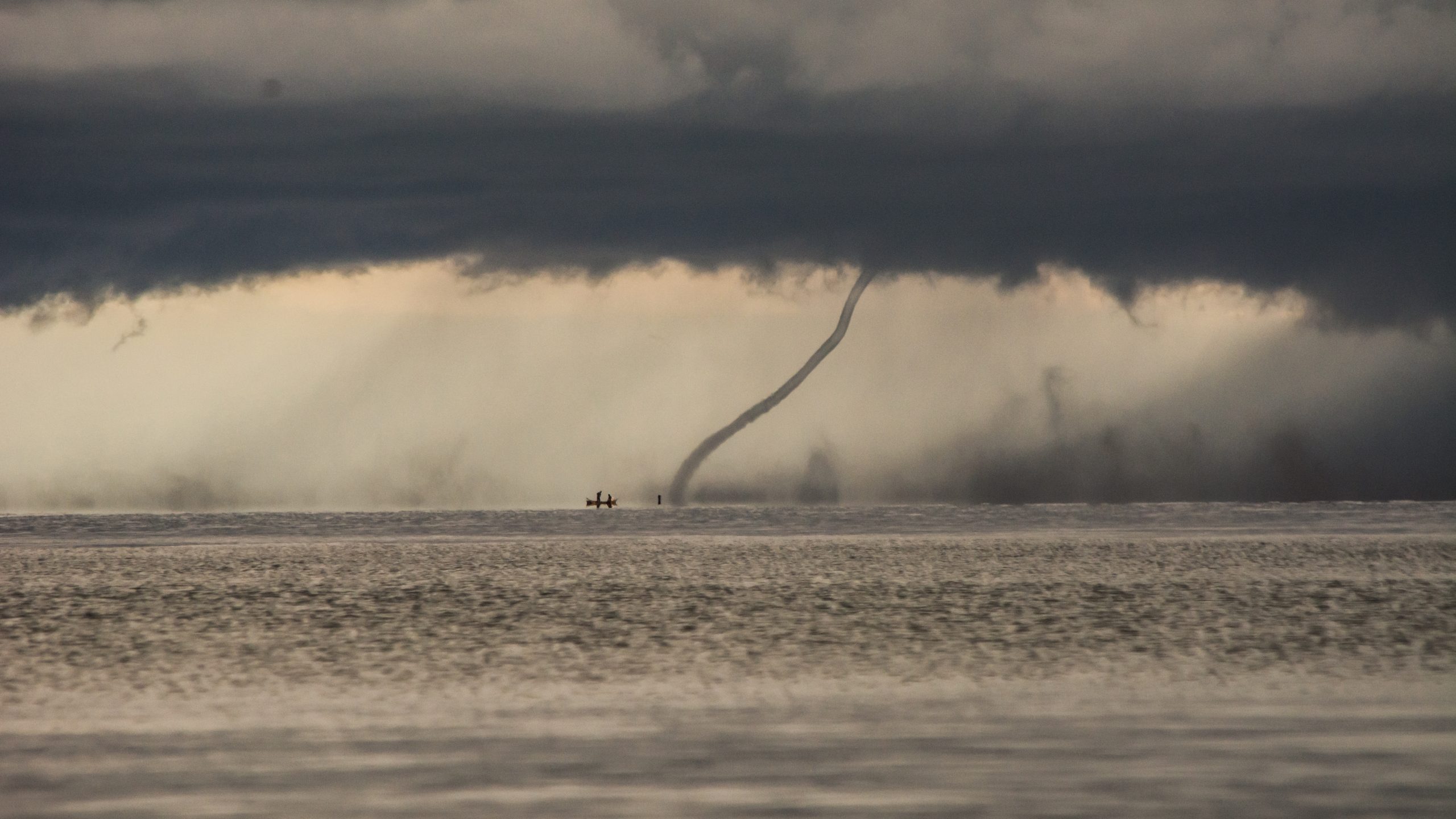
A flashback is not a polaroid of the past. It is being swept back into it — the sights, sounds, smells and shame, all at once. This is the Vortex, and there is a way through it.
When we have lived through developmental and relational trauma, most of us learn to suppress — to avoid, to numb, to dissociate, to displace. If I don’t acknowledge it, it can’t hurt me. If I don’t feel it, it can’t hurt me. If I push it onto someone else, it won’t hurt me. We will do almost anything to keep the reality of the trauma at arm’s length. The difficulty is that what we push down does not stay down. It creeps back in other forms — panic, anxiety, depression, nightmares, sleep paralysis, autoimmune trouble, a body that aches with no medical cause — until we fear our own emotions, resent our own pain, and sometimes wonder whether we are going mad.
Recovery, then, has to include the opposite movement: re-sensitising, re-engaging, reconnecting, and taking ownership. But that reconnection can itself be a powerful reminder of the past. We have the word flashback from our understanding of post-traumatic stress, and for me it falls far short of describing the actual experience. We do not simply see a snapshot. We relive the sights, the sounds, the smells, the sensations, the emotions — the shame and revulsion, and sometimes, disturbingly, even the enjoyment. It is this whole-body re-immersion that I call the Vortex.
What is happening in our system
When we are triggered, our system runs through a sequence of instinctive, protective responses — healthy mechanisms, built in for survival. First we tend to freeze, just for a moment, to read the situation and weigh our options. Then comes the urge to flee; if running is impossible, or we choose not to, then standing our ground and facing the threat — fight — may be next. If escape is blocked and the threat is overwhelming, we may fawn or appease (the ‘friend’ response). And when every other option fails, we may flop — shutting down, collapsing, dissociating.
With developmental trauma there is a cruel complication: the threat is so often coming from a caregiver, the very person we depend on. We cannot simply run, because we live there. Fighting back may be impossible against someone bigger, stronger, or more able to out-think us. So appeasement becomes the strategy of last resort — the collusion of the subjugated, the path of least risk. I have lost count of the survivors of rape, abuse and assault who have asked me, “Why didn’t I fight? Why didn’t I scream?” My answer is always to have compassion for the self they were in that moment: you kept yourself safe; you chose the least dangerous option available to you, even if that meant dissociating.
Shame is two-fold. There is healthy shame — what I call guilt — that follows genuinely hurting another. And there is toxic shame, which does not belong to us at all, yet sends us spinning into the Vortex.
Two directions of spin
The Vortex is closely tied to shame and confusion, and it can take two forms, which may come singly or together.
Pushing in feels like being sucked into a whirlpool. It draws us down into a deep, dark place where we feel younger, powerless, and to blame. We internalise the shame and become intensely self-focused — it must be me; it must be my fault. This is the over-adapted Compliant Child position; we hide the chaos from others and quietly assume the role of Victim.
Acting out is more like a whirlwind or tornado. Here we let ourselves feel the rage of what was done to us, becoming chaotic and grabbing at what feels like the powerful position. This is the over-adapted Rebellious Child; we hurl the anger and fear outward, blaming others — but we are still operating from fear (the fear that we really are to blame, or really are not enough), and we have still lost control, and we may be hurting people in the process. Here we can slip into the role of Abuser.
There is also a heavier, slower version of the Vortex — a kind of bottoming out. Clients describe it as “stuck in a loop,” “in Groundhog Day,” “all my energy gone down the plughole.” Physiologically this is the flop response, leaving us depressed, fatigued and unmotivated, though the brain may be racing anxiously at the same time, trying to defrost us and get us out. So the Vortex can suck us down, or whip us up, or pin us flat — and each presentation needs a different response: grounding and containment for the spin, encouragement and a springboard for the flop.
The way through is the centre
Our instinct, understandably, is to escape the Vortex — to pull away from it as hard as we can. But, as with a real tornado, trying to wrench ourselves out usually just whips us further into the chaos. The counter-intuitive truth is that the way to survive it is to press into the centre. The centre of a tornado is calm and still; there is a funnel through which you can look up and see blue sky, instead of fixing on the chaos spinning around you. A moment’s mindful pause — returning to the breath, tuning into the senses, leaning on our connection with the Source — can give us that stillness.
And in the most intense, dissociative episodes — the ones that can be terrifying for the client and unnerving for anyone nearby — the person often cannot find any anchor inside themselves at all. Many survived abuse at a very young age, before they had words, and in these moments, they may become non-verbal and utterly without grounding. What is needed then is not insight or interpretation but co-regulation: a trusted other who will breathe with them, contain the chaos, and lend the grounding they cannot generate alone, holding the boundary at the edge of the window of tolerance rather than letting them fly off.
This is, frankly, advanced work, and it is one of the clearest reasons I built this model into a training course rather than only a self-help book. Knowing what the Vortex is matters. But learning how to be the anchor, the regulated other in the room when a client is dissociating — how to ground them, how to stay within your own window while you do it, how to help them build their own anchors for next time — takes practice, supervision, and a community of fellow practitioners to learn alongside. There are gentle, practical anchors we teach: a stone held in the hand and ‘charged’ with safety and hope; a particular blanket or shawl infused with comfort, to wrap around oneself when fragmented; ways to discharge the trapped energy through movement, music or unsent letters. Small things — but, practised in advance, they can be the difference between being swept away and finding the still centre.
Naming it changes it
One of the most therapeutic things we can offer a person who experiences the Vortex is, simply, the language for it. So much of the terror of a flashback lies in not knowing what is happening — the conviction that one is losing one’s mind, that the present danger is real, that this will never end. To be able to say, calmly and from experience, “what you are describing is the Vortex; it is a kind of dissociation; it is your system doing something it learned long ago to keep you safe; it has a centre, and there is a way through it” — this alone can begin to loosen its grip. We are not explaining the feeling away; we are giving the person a handhold on it. A named experience is a shareable experience, and a shareable experience is one we no longer have to face entirely alone.
None of this denies the depth of the wound. It simply means the wound no longer gets the last word.
It also helps clients begin to predict their own Vortex, which is the start of real agency. Over time, and with a trusted companion, a person can learn the early signs that they are being pulled toward the spin — the particular smell, the tone of voice, the time of year, the bodily cue — and can reach for their anchors before they are fully swept away. They begin to recover more quickly, and to feel less at the mercy of the unexpected.
For us as practitioners, the Vortex also asks something of our own self-knowledge. We cannot offer co-regulation from a dysregulated place. If a client’s spin tips us into our own activation — and it can, especially where their story brushes against ours — we are no longer the calm centre they need. This is precisely why our own personal therapy, our own grounding practices, and honest supervision are not optional extras but core competencies. We can only take someone as far into the storm as we have learned to stand within our own.
A few questions to sit with
- Can you tell, in the room, the difference between a client pushing in and one acting out — and does your response change accordingly?
- What helps you find the still centre when your own system is activated?
- What grounding anchors do you already trust — for yourself, and to offer others?
About the course
The Anastasis Model sits at the heart of a Level 7 Diploma in trauma-informed, advanced therapeutic practice — written for counsellors and psychotherapists who want to work more deeply with developmental and relational trauma, and who are moving towards senior accreditation (SCoPEd Column C).
It runs online, with three in-person residentials, over fifteen months: October 2026 to December 2027. The group is deliberately small — capped at twelve — so no one is ever just a face in a crowded screen. The fee is £5,250, with payment plans available.
To enquire, email training@authentictandt.uk or call Annie on 07949 677405. We shape the cohort together through conversation, so do get in touch early.